 It was a loud, public failure.
It was a loud, public failure.
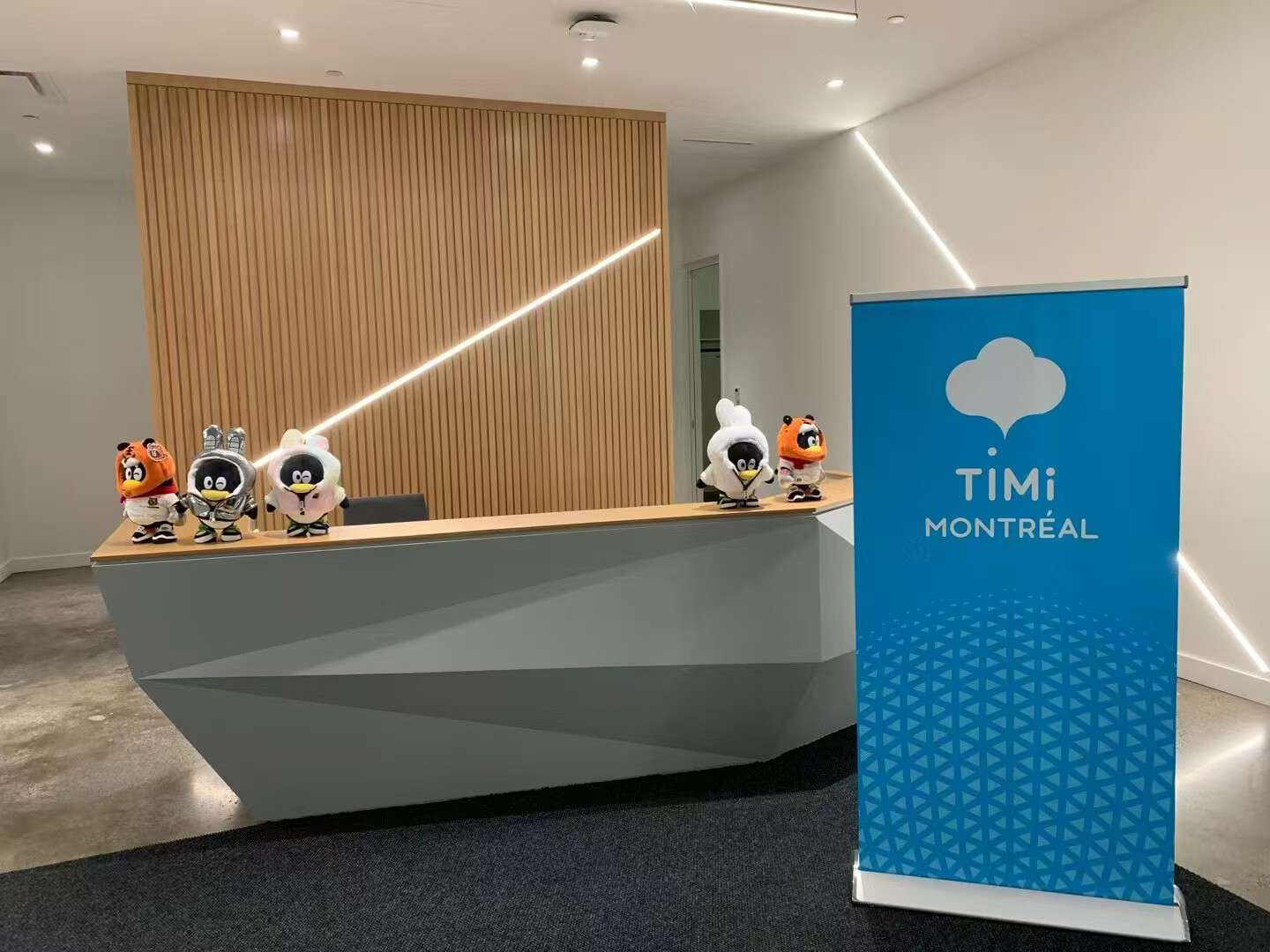
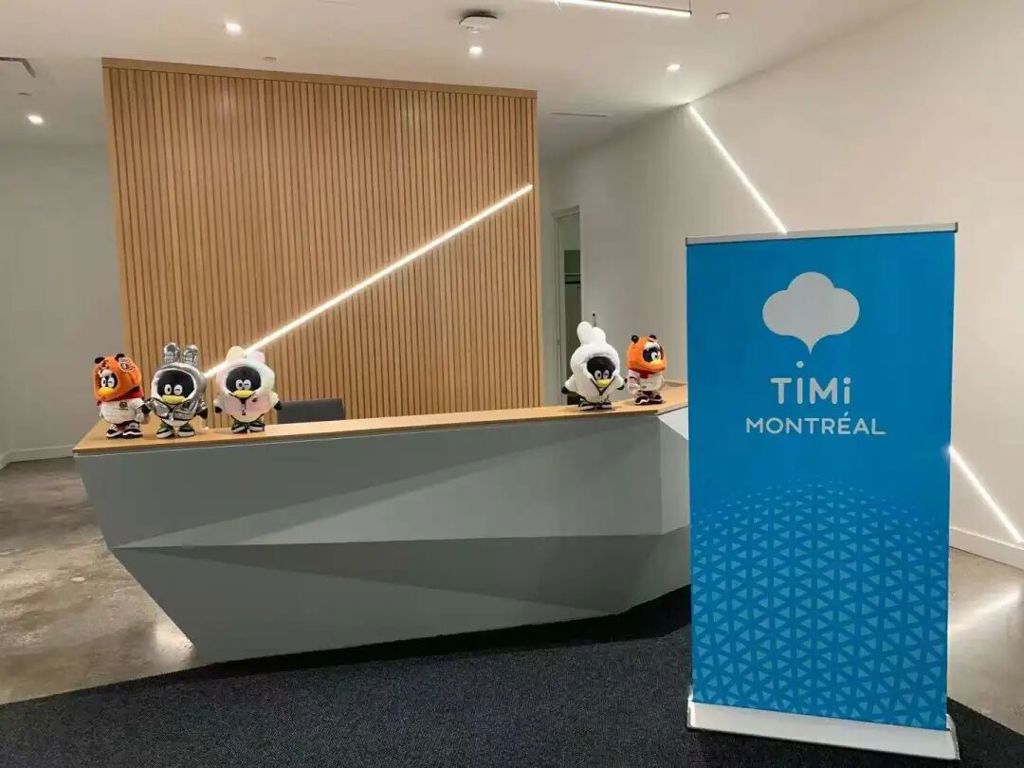
Half a year before TiMi Montréal shut down, the project had already slipped into a strange loop.
A major licensed title—after several shifts in direction and just beginning to take shape—came to an abrupt stop when the IP holder pulled out. The team pivoted again. This time, to an open-world game based on Chinese classical supernatural folklore.
The developers in Montreal were still trying to make sense of
Executives in China were focused on something else.
They spent long stretches discussing what they called aesthetic issues: what the characters should wear, whether they looked attractive enough, whether the visuals better matched Asian tastes.
Neither side fully understood the other.
At one internal meeting, according to a developer who attended, the boss from headquarters tried to bring the two sides into alignment.
“Let me show you an AI video our Shanghai team made,” he said.
The room went quiet.
A group of North American developers—many of them veterans, some already gray-haired—stared at the screen. The video looked like an old film adaptation run through generative AI. What stood out were polished female faces, revealing outfits and lingering close-ups of women’s feet.
“We appreciated the effort to align direction,” one developer later said. “We just thought we might see something more inspiring. But it was basically more emphasis on character art style and visual detail. It had almost nothing to do with what we in Montréal were actually making.”
Moments like this were not unusual in Tencent’s overseas game development efforts. Because the people I interviewed are still bound by NDAs, I can’t name the project or disclose further details. Being told “say nothing” leaves me in the awkward position of having reported a lot while seeming to report nothing at all. But while digging through older material, I came across a strikingly similar episode.
More than a decade ago, when Tencent acquired Riot Games, the developer of League of Legends, The Guardian reported that designers had heard similar feedback from Chinese counterparts:
“They said things like, ‘they [Chinese gamers] don’t really love grotesque monsters, goblins and ogres,” the designer recalled. “They like the pretty, young, more anime style.’”
She remembers a long discussion about “butts” and the subtle differences between drawing them for east and west. Another time, they talked about mermaids. “A mermaid is great because she has a female torso and fish bottom,” she was told. “Here’s what’s not great: a fish head and sexy legs.”
What I can tell you is this: swap out the characters and project names, and that was much the same as what TiMi Montréal lived through in its final stage.
After the studio shut down, most coverage in China and abroad stayed at the surface: too much money, too little discipline, culture clash, poor fit. Over the past month, I tried to reach multiple developers who had worked on the project and piece together what actually happened inside TiMi Montréal. Their accounts were partial—shaped by confidentiality, by caution and, in some cases, by the fact that many were still looking for work.
Still, from those fragments, a clearer picture emerged:
TiMi Montréal was less a single failed game than a five-year experiment. It started with a team built on North American AAA assumptions. For a while, it had real freedom, real respect, and real momentum. Over time, though, direction kept shifting. So did the standards by which the work was judged. What followed was not a dramatic collapse but a gradual loss of reference. The harder both sides pushed for results, the further they drifted from them.
Seen in the context of the global games business, TiMi Montréal looks like more than an overseas setback for Tencent. It looks like an early signal that this phase of gaming globalization is being recalibrated. The question is no longer simply whether Chinese companies can build global AAA games, but which logic will shape them.
Back in 2021, if you asked where in the world was best suited for making AAA games, Montreal would have been close to the obvious answer.
That position had taken decades to build. Since Ubisoft established itself there in the 1990s, Quebec’s tax credits had steadily lowered the cost of big-budget development. At their most generous, they covered as much as roughly 37.5% of payroll costs. EA, Eidos, and Bethesda followed. Senior developers moved from studio to studio. Over time, Montreal built up a dense talent pool centered on Ubisoft, earning it a nickname among developers: the “Ubisoft supermarket.”
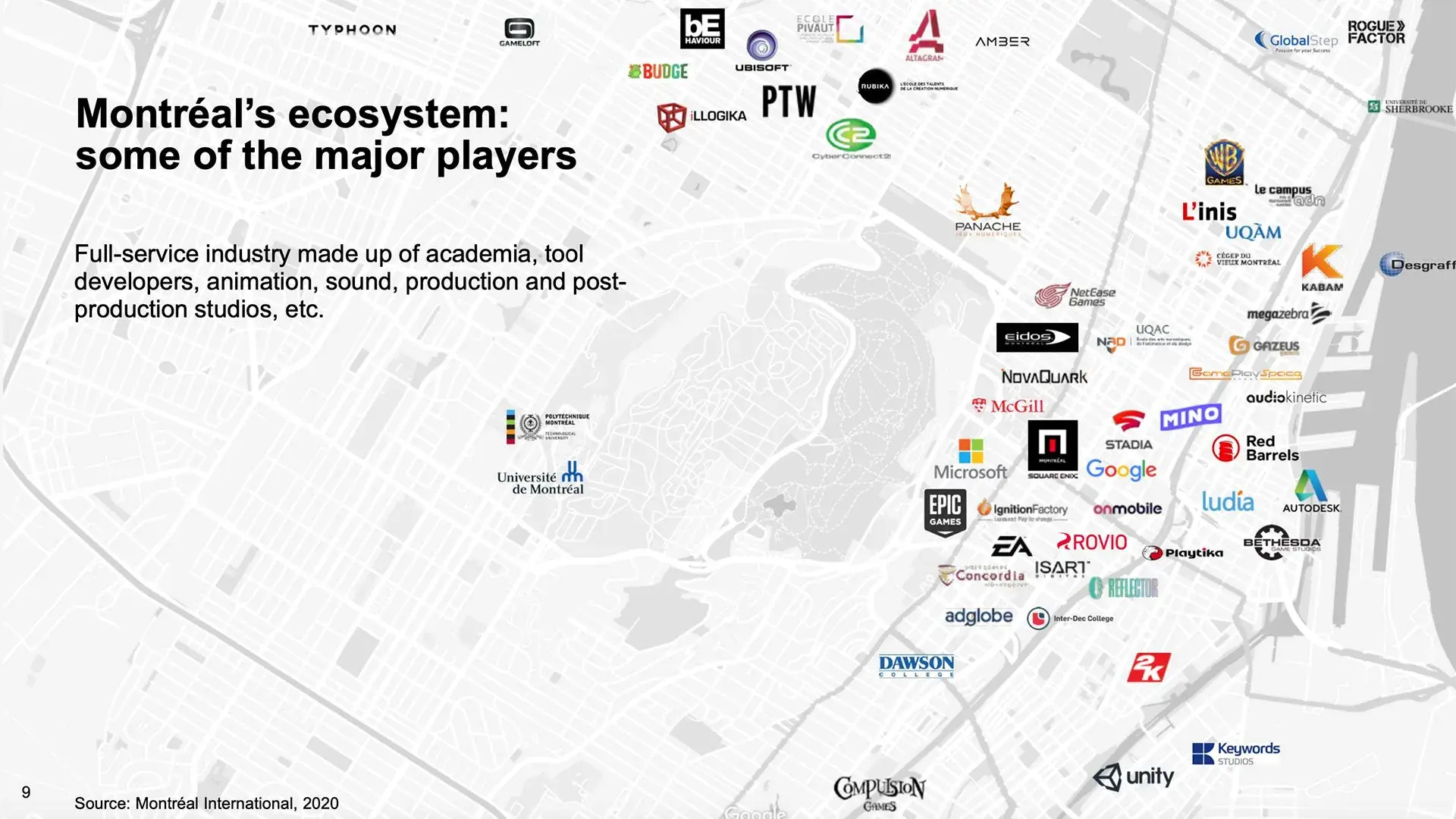
After the pandemic, another wave of companies arrived. HoYoverse, 2K, Amazon and Quantic Dream all set up studios, adding to what was already one of the world’s most concentrated hubs for game development.
By 2021, Montreal had more than 200 game companies and roughly 15,000 industry workers. Ubisoft alone employed more than 4,600 people in Quebec, more than 30% of the province’s game-development workforce. For Chinese companies looking to build console and AAA capabilities, the equation looked straightforward. The capital was there. The talent was there. The experience was already in place.
Tencent moved quickly.
In July 2021, it announced the opening of TiMi Montréal and began recruiting aggressively. Public coverage positioned former Assassin’s Creed creative director Ashraf Ismail as the studio’s central figure, though his hiring also drew attention after his 2020 departure from Ubisoft following an internal misconduct investigation.
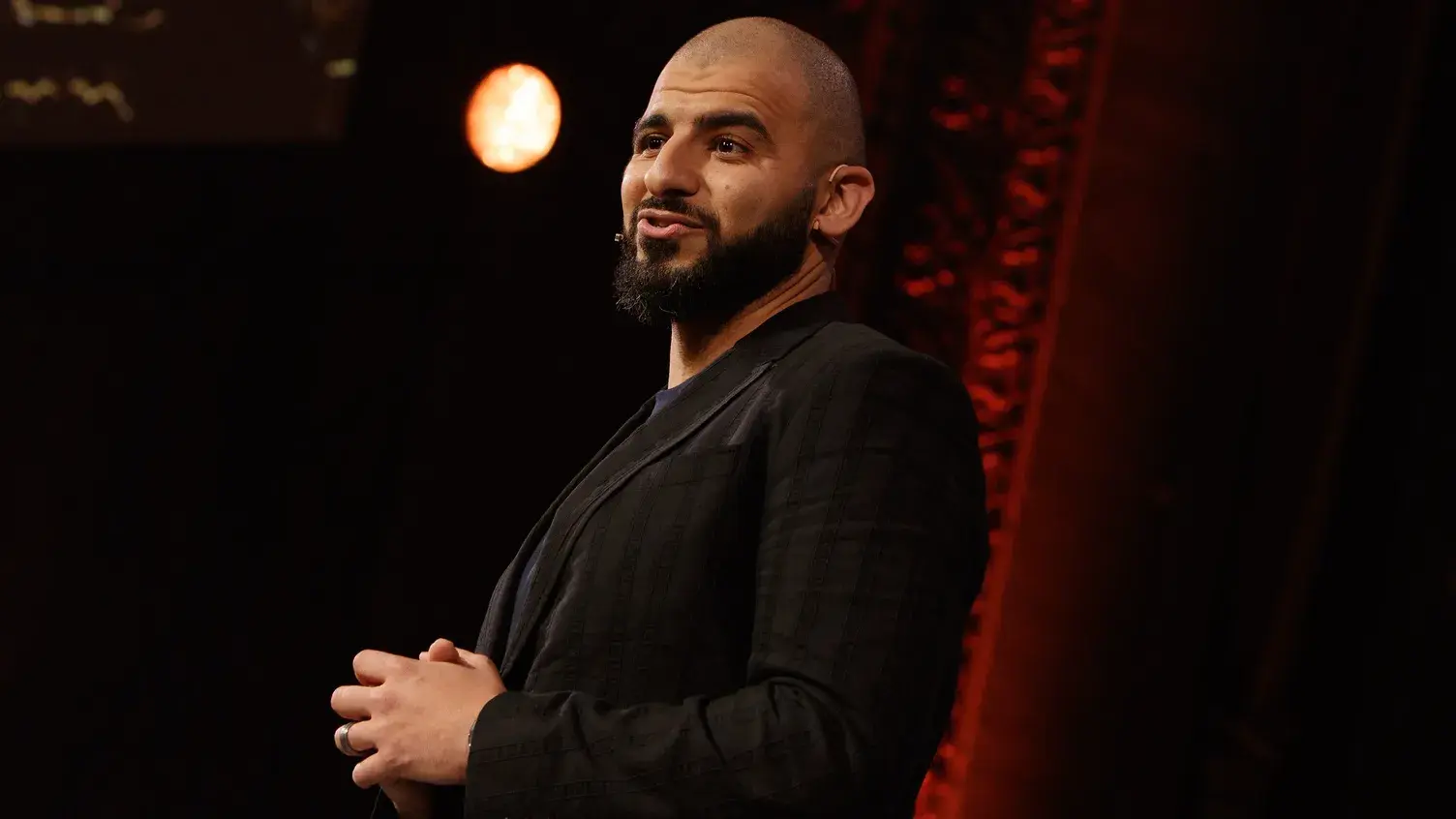
Inside the studio, however, his role was not clear or stable from the start.
Interviewees described him in sharply different ways. Those who joined early described him as closer to an adviser than a day-to-day creative lead. In their telling, production was effectively led by producer Philippe Fournier, who had worked on Far Cry, and game director Marc-Antoine Pietri. In that structure, Ismail’s value lay in assembling talent and lending credibility—common in North American development, where senior leaders often bring trusted collaborators with them. As an industry veteran, Ismail had that kind of pull.
Those who joined later described something different. By then, they said, he was deeply involved in design and development, even building presentations himself and operating in practice as a creative director. Still, assessments of his creative contribution remained cautious. Some said he pushed for more ambitious directions that did not ultimately win approval from headquarters.
The divergence was telling. In a studio built from multiple networks, histories and reporting lines, formal structure and actual authority did not always align.
What is clear is that TiMi Montréal did attract serious talent early on.
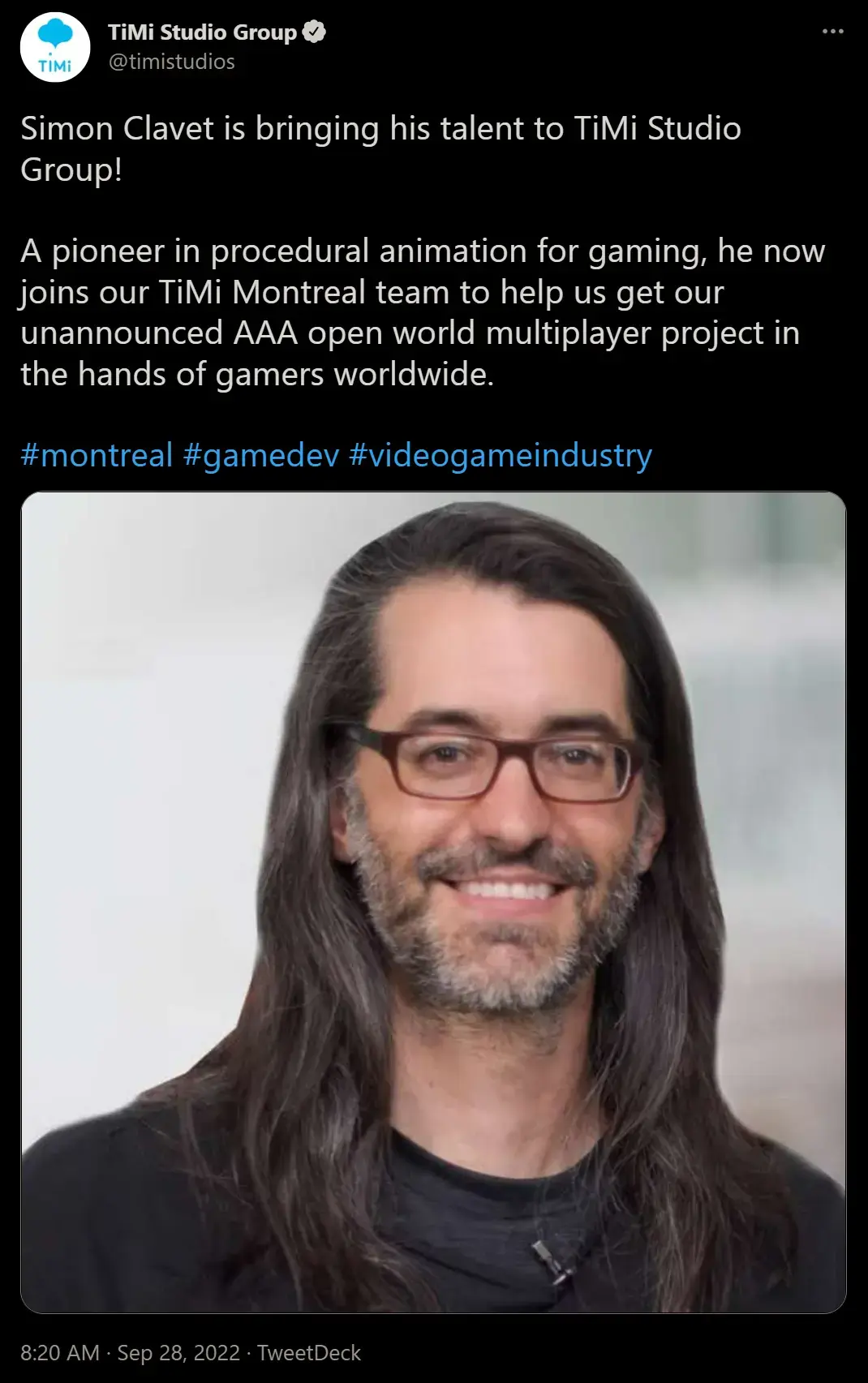
Patrick Limoges, a veteran of more than two decades, joined as art director in March 2022 after serving as art director on Watch Dogs: Legion and working on several Assassin’s Creed titles. Simon Clavet, who had spent 16 years at Ubisoft, joined that September as animation programmer. He had worked on major franchises including Assassin’s Creed, Far Cry and For Honor, and was known for helping bring motion-matching technology into mainstream AAA production.
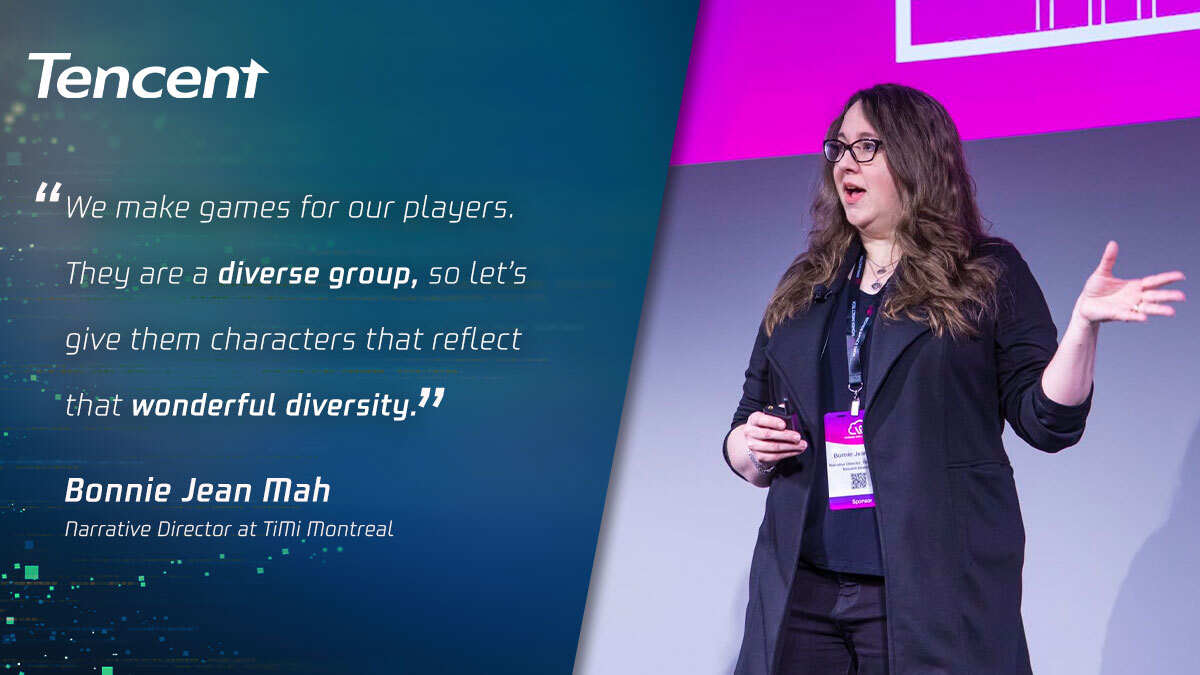
The studio also recruited beyond Ubisoft. Bonnie Jean Mah joined as narrative director in January 2022. With a background in film and television, she had led narrative work on Age of Empires IV, worked on Gears of War 4, contributed to Warhammer 40,000: Space Marine, and later helped oversee narrative direction for the Gears franchise at Microsoft’s Coalition studio.
From 2022 to 2023, the team grew from a few dozen people to nearly 100. Most had more than a decade of AAA experience.
And by multiple accounts, they worked like it.
Developers described long days, heavy commitment and a production culture closer to a traditional North American AAA studio than to the stereotype of a relaxed overseas satellite. Some started at 7 a.m. Others stayed until 7 or 8 at night. Though part of TiMi, the studio’s internal culture was highly localized. Its workflows, conversations and assumptions all felt Western.
For a while, morale was strong.
The team worked on-site two or three days a week. On those days, people often went out together for lunch—regardless of nationality or language—talking about games, work and life. Several developers said many senior hires joined with a sense of possibility. They were tired of recycling established franchises. They wanted to build something new.
There was a shared goal. Within a broad framework, the task was simple: make the game better, make it distinctive, make it stand out in the AAA market.
At the beginning, TiMi Montréal seemed to have everything going for it.
For roughly its first two years, TiMi Montréal focused on building a new IP. Headquarters in China was mostly absent. Aside from a small number of liaison roles, most frontline developers felt little direct intervention.
But every six months, at milestone reviews, headquarters would reappear. That was when the differences became harder to ignore.
The first layer was language.
The project operated across three of them. Montreal is in French-speaking Canada, and colleagues often spoke French day to day. English was the working language for tools and cross-border collaboration. Feedback from headquarters came in Chinese. Information passed through multiple rounds of translation before it reached the people doing the work.
But the deeper divide was not linguistic. It was structural.
The two sides did not share the same understanding of process—what an early-stage game should look like, how progress should be measured, or what counted as meaningful work.
In North American AAA development, the early phase—conception and prototyping—is about validating gameplay at the lowest possible cost. That means accepting work that looks rough. Characters may not have final models. Environments may be little more than gray blocks. These are placeholders. At this stage, the point is not whether something looks polished. The point is whether it works.
Many games later praised for high production value looked crude in early demos. Early builds of Overwatch were famously bare-bones: gray-box levels, unfinished effects, even placeholder abilities. A more recent example is Clair Obscur: Expedition 33, where early visual work was extremely rough. Experienced developers know how to read through that. They can see what it might become.

In this system, ugliness is not a flaw. It is a phase.
But judged by a different standard—whether something looks polished, persuasive, close to final—those same prototypes can easily be dismissed as immature or not good enough.
Several developers said leadership in China often preferred something else.
For alignment and milestone reviews, they felt pressure to present a highly polished slice: refined visuals, expensive-looking art, a premium feel. Whether the underlying gameplay had been fully validated could become secondary. The expectation was rarely stated outright. But over time, it became the default. One developer said teams in China explicitly referenced the kind of polished early demo associated with Black Myth: Wukong.
There was another difference. The work shown to executives in China, developers said, was usually expected in the form of pre-recorded video rather than a live playable build.
“They only watched videos,” one person said. “They never actually played the game.”
The problem was seeded early.
Direction kept shifting—sometimes sharply, roughly every six months. Projects moved from one concept to another, sometimes so abruptly it felt like jumping from one era to another. New IPs were proposed, discarded and restarted. Work was repeatedly torn down and rebuilt. A shared definition of success never fully formed.
On paper, this sounds like a problem that could be solved through compromise. The Western team could present more polished materials. The Chinese side could focus more on gameplay than surface detail.
In practice, it didn’t work that way.
“At the time, you don’t see the problem,” one developer said. “Everyone thinks they’re moving in the same direction. Only later, when something is built, do you realize the ‘final game’ in each person’s head was never the same.”
By 2023 and 2024, the divergence had become harder to ignore.
Public information suggests the studio at one point shifted toward extending existing TiMi IPs internationally, including work tied to Pokémon Unite and Call of Duty: Mobile.
Developers who joined later described a studio in near-constant reset. “When I looked through the earlier records, it felt like they were always changing projects, always making something new, then canceling it and starting over,” one developer said. “And honestly, each version looked pretty good. But maybe by the time you got there, it was already not enough. Genshin already existed. If you make something too similar, then what’s the point?”
By April 2025, the studio began trying to fix the problem by changing the team.
The art department was cut first.
LinkedIn records suggest the art side had already seen multiple rounds of turnover. Patrick Limoges, the art director, left in June 2024 for Invoke Studio. Brian Sum, a principal concept artist who appears to have taken on some of the responsibility, left in the layoffs of May 2025. In February 2025, former art manager Donglu Yu had been promoted to art director.
For some, the cost was personal.
One environment artist wrote on LinkedIn that it had been his “dream job.” The layoff came suddenly, he said, and he had not recovered from it. Three months later, he posted again: still looking for a role. Earlier this year, he wrote that every opportunity seemed to come with candidates who had “incredible experience.” He still had no offer.
Ashraf Ismail later reshared the post.

After the April 2025 layoffs, the studio had shrunk to around 60 people, according to one developer.

For a moment, it narrowed its focus again: One project. One direction. An AAA title built on a major Chinese historical IP.
Then that fell apart, too.
A conflict with the licensor halted the project. One developer who had worked on it said that, if the deal had held, the game itself could have been made. The team understood the genre. The material was within reach. It was not an impossible project.
Then came one last pivot.
Management in China decided that since the studio had already been experimenting with Chinese themes, it should continue. The new concept drew on Chinese classical supernatural stories.
For Chinese audiences, that material carries centuries of narrative and symbolic weight. For a team of Western developers in Montreal, it landed differently. More like a ghost story. Or a fantasy setting with unfamiliar rules.
One developer put it this way: it was like asking a Chinese team to make The Texas Chainsaw Massacre. You may understand the genre. That doesn’t mean you inhabit the world behind it.
Still, the studio remained full of experienced developers. Many had come from Ubisoft. They could build systems. Prototype mechanics. Construct a world. By early standards, the demo wasn’t bad. One developer said it even carried a certain Shaw Brothers texture.
But it kept drifting away from what headquarters wanted. The feedback was rarely blunt. Instead, it arrived in fragments.
The team might build a cast around combat readability—different body types, skills and roles, each serving gameplay clarity. Then someone from above would say there weren’t enough characters who looked "beautiful".
Over time, the effect was corrosive. Developers found themselves spending more energy trying to infer what leadership valued than deciding what the game itself required. The question stopped being whether the work held together. It became whether it would be approved.
The studio grew anxious. One developer said headquarters might suddenly decide to chase a new trend—something popular, something marketable. The instruction could sound simple. For the team, it meant disruption.
“You’d think, this isn’t what we were making at all,” the developer said. “So now what?”
As those insertions accumulated, the game lost coherence. Individual ideas were not always wrong. They just didn’t belong.
“You could tell which things came from one logic and which things didn’t,” one developer said. For an AAA game, that can be fatal. If the world no longer feels internally consistent, players stop believing in it.
The conflict was rarely explosive. There were no daily confrontations. No clear breaking point. That was part of the problem. The studio simply lost the ability to say, with confidence, what the game was supposed to become.
The atmosphere shifted with it.
More people left. The office grew quieter. Lunch conversations no longer revolved around gameplay, systems or ideas. One developer described the mood as something closer to middle-aged drift than creative momentum.
The end did not come all at once.
As late as July 2025, the studio was still hiring, according to LinkedIn. On the surface, work continued.

But small signals started to appear. One developer remembers the day the drinks in the office fridge were suddenly replaced with beer. People sensed what it meant.
By late November, the team was called into a meeting. It was short. Leadership said the project was over. After that, one person said, the studio continued to exist—on paper. But there was little left to do. It became hard to invest yourself in something everyone knew was finished.
By then, some had already moved on.
Philippe Fournier, the studio’s producer, left in November 2025 and joined Warner Bros. Games Montréal as an executive producer, according to his LinkedIn profile.
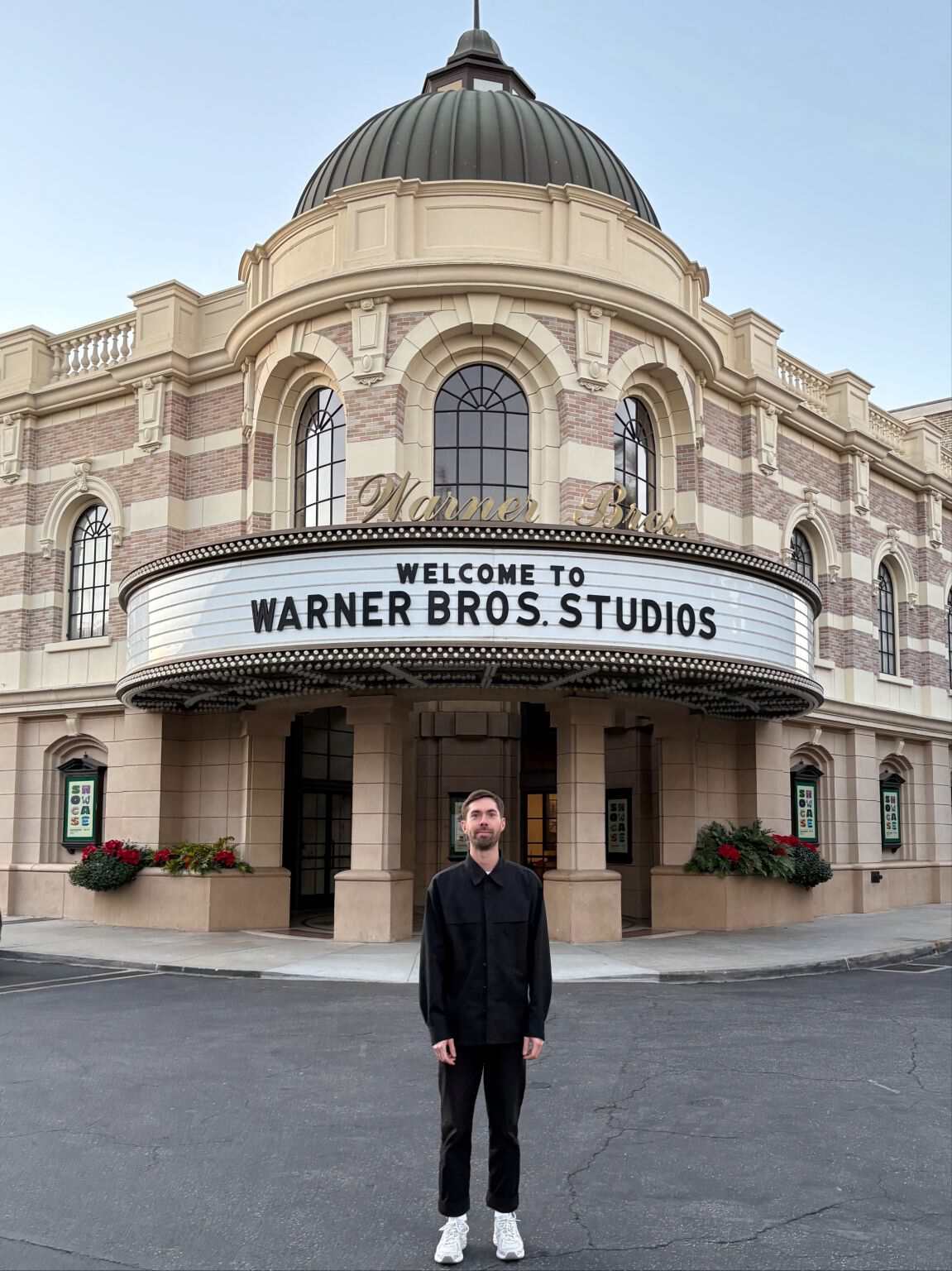
In announcing the move, he wrote that producing video games meant "creating memorable experiences for players that combine imagination and technology." Exploring Warner Brothers’ famous Hollywood studios, he said, brought back memories of the games, films and television that had shaped him—the kind of place where dreams begin.
That may be the saddest part of TiMi Montréal.
The teams in China and Montreal were both full of people who loved games. They were both chasing a dream they believed in.
They just weren’t chasing the same dream.
On Feb. 20, 2026, TiMi Montréal officially shut down.
The news first surfaced on LinkedIn, where a senior gameplay programmer wrote that everyone had known the day was coming, though it was still hard to accept when it arrived. The post was later deleted or made private. Three days later, Game File reported publicly that Tencent had closed the studio.
It was not an isolated case.
According to a tally by CGames, major Chinese publishers began a broad push into overseas AAA development after 2020, with activity peaking around 2023. Just a few years later, that wave has sharply receded. Of the 18 overseas first-party studios once run by Tencent and NetEase combined, only about eight are still operating.
The pattern extends beyond China.
This year alone, Wildlight’s Highguard shut down 37 days after launch. Ubisoft continued layoffs. Embracer retrenched. Epic Games cut about 1,000 jobs. The individual stories differ. The underlying problem does not. AAA games are getting harder to justify before they are finished.
The problem is not simply cost or time. AAA has always been expensive and slow. What has changed are the conditions that once made those risks acceptable: the market, the competition for players’ time, and the industry’s tolerance for failure.
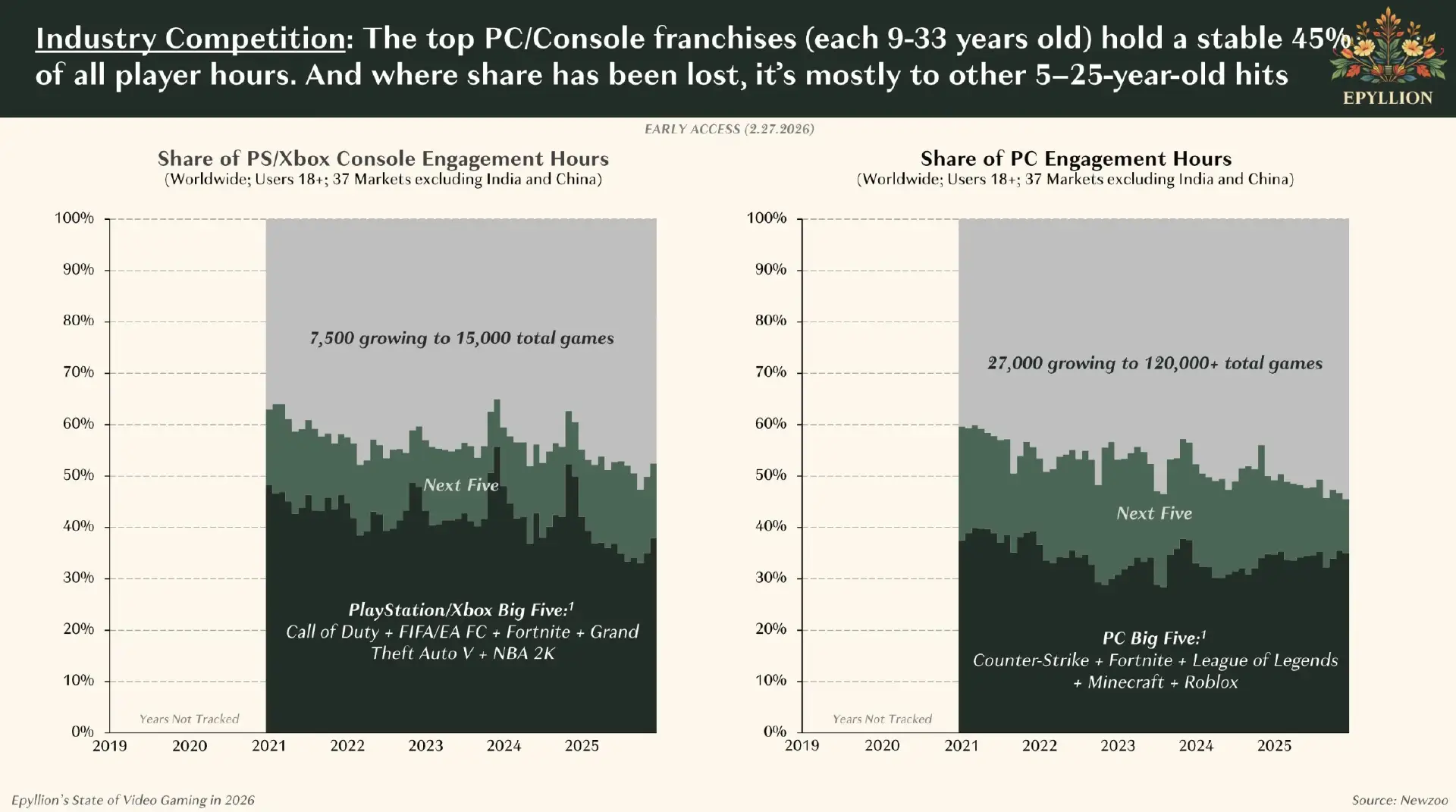
n February, analyst Matthew Ball released his annual state of video gaming report. Headline industry revenue in 2025 still suggests growth. But the picture is misleading. Strip out a handful of fast-growing segments, and the revenue pool available to most developers and publishers is shrinking.
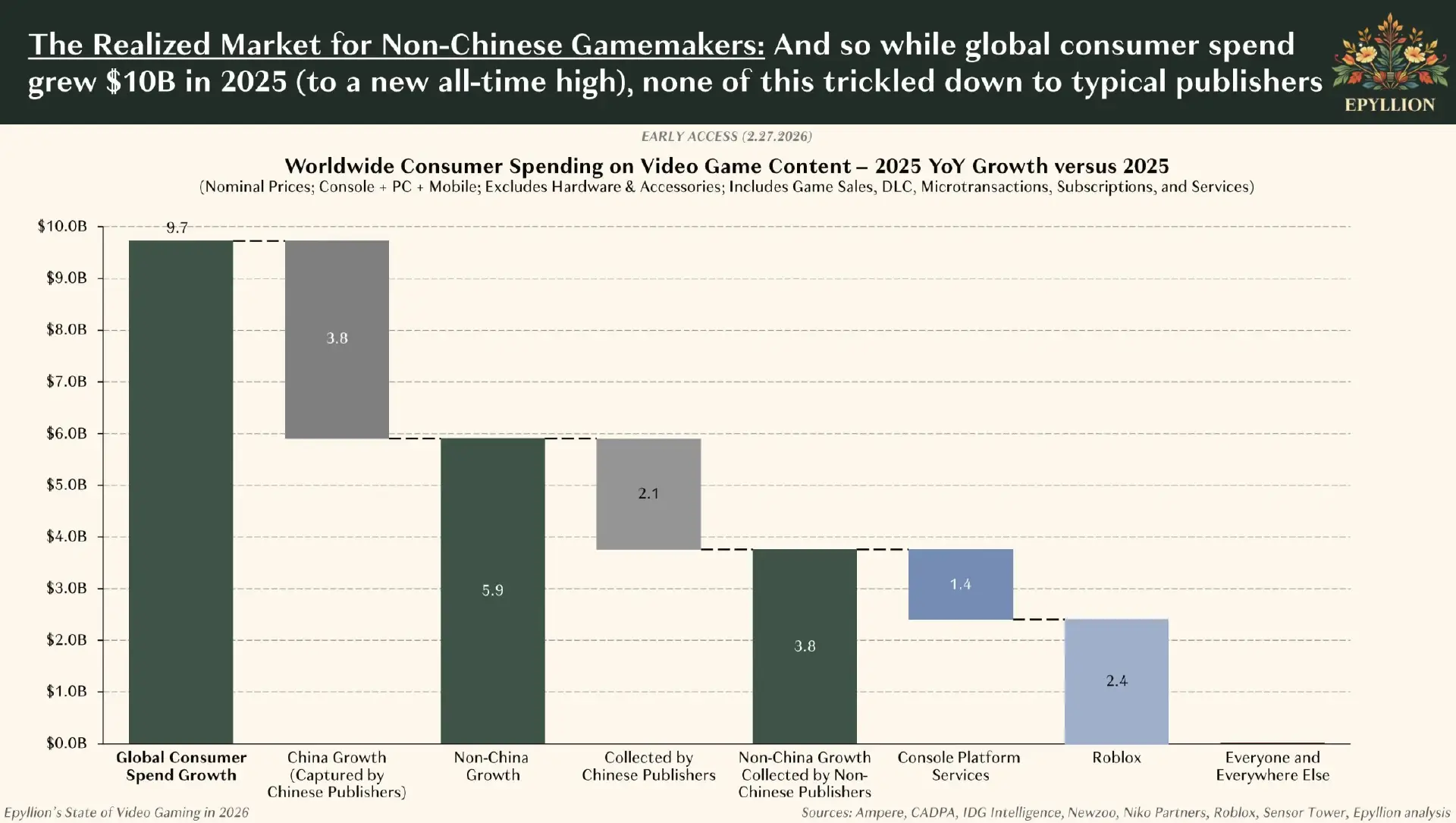
On PC and console, the squeeze is sharper. A small handful of games—often no more than 10 in a given year—account for roughly half of all player time.
Not everyone agrees on the diagnosis.
At GDC 2026, Simon Zhu, former president of global investment and partnership at NetEase Games, framed the problem differently. In his view, it is less a collapse in demand than a liquidity crunch on the business side. During the early days of the pandemic, 300-400 new game studios or projects were launched—many with only partial funding, sometimes covering as little as 20% of their expected budgets. As interest rates rose, money shifted toward AI, and consolidation accelerated. Many of those projects were bound to be cleared out.
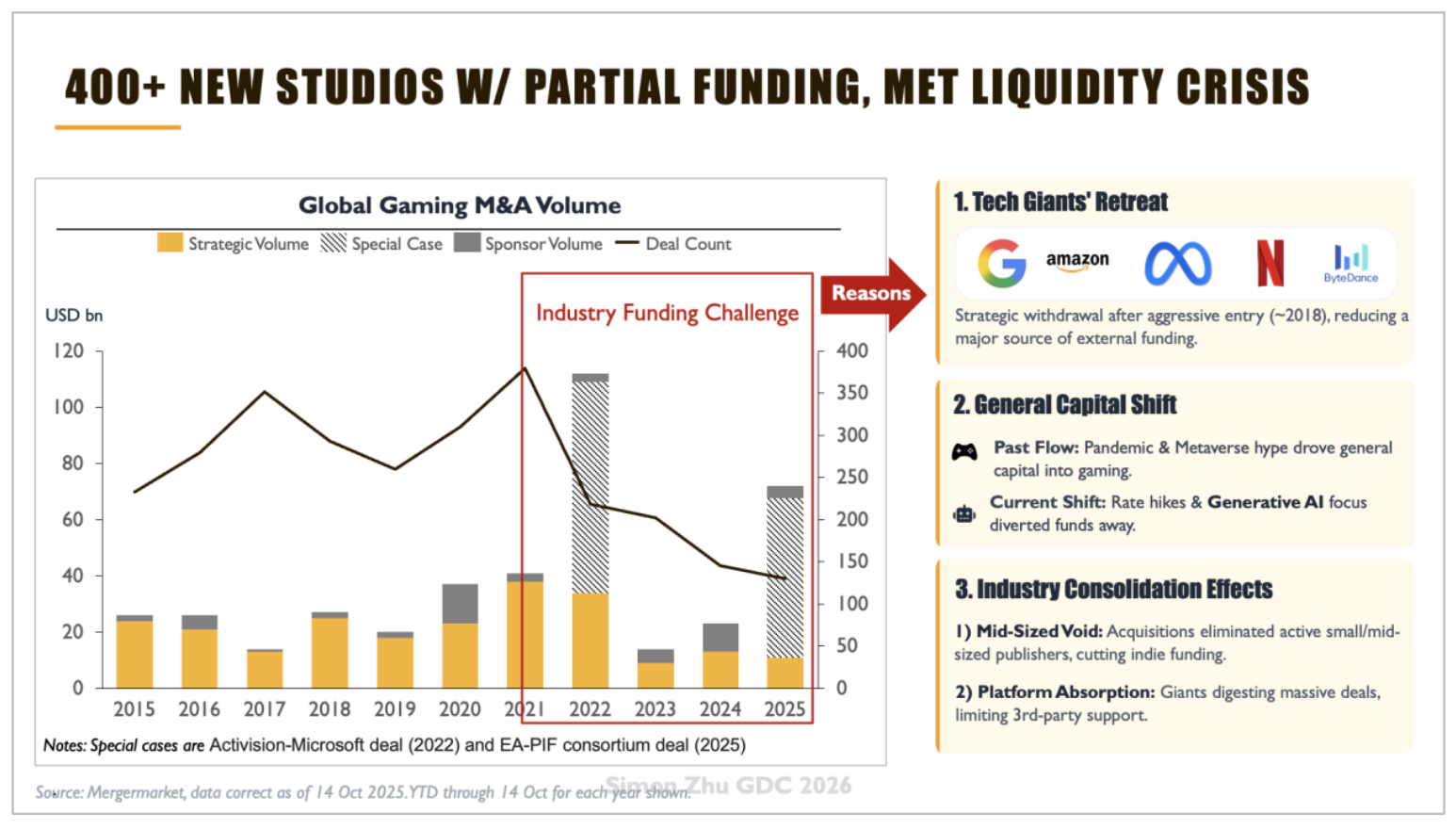
That is the more optimistic reading. It suggests a cycle, not a structural break.
But even within that framework, one point remains. This is a brutal moment for the business. And the projects most likely to survive are the ones that feel genuinely distinct.
And AAA itself has become heavier.
Budgets that once ranged from $50 million to $150 million now often exceed $200 million. Development cycles that once ran two to five years now stretch to five to seven, sometimes longer. By the time a game reaches market, the stakes are enormous and the margin for recovery is thin.
Highguard illustrates the problem. Backed by Tencent, it briefly approached 100,000 concurrent players on Steam after launch. Then the reviews turned. Within a week, 90% of the audience was gone. By then, most of the budget had already been spent. There was little time—and little money—left to respond.
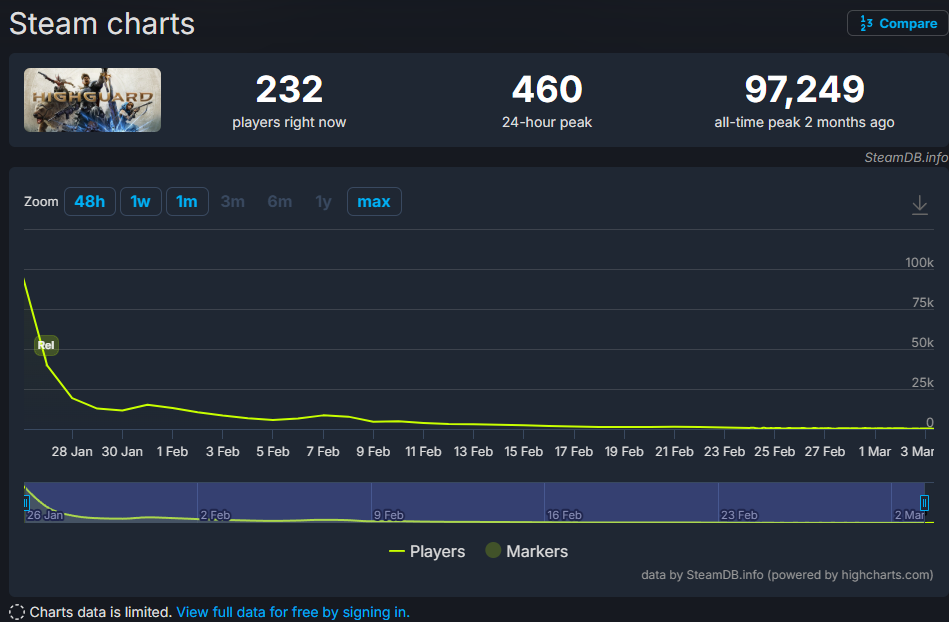
Newzoo’s 2025 game market report points to the same pressure from another angle:
Player interest in new single-player games typically lasts one to two weeks, with engagement declining by approximately 60 percent by the fifth week. After 12 weeks, retention decreases at about 1 percent per week.
That is the ground on which Chinese companies tried to plant their overseas AAA ambitions.
On paper, the strategy was straightforward: go to Montreal, plug into a mature development ecosystem, pair Chinese capital with Western production talent and build new global IP.
TiMi Montréal was that strategy, in practice.
But you can buy talent. You can buy process. You cannot buy time, shared judgment or tolerance for uncertainty. That is where the model breaks down.
The Chinese teams described by developers in these interviews are often strong at something else: iterating quickly around user demand, retention, efficiency and monetization, then refining a solid product into something highly competitive. That helps explain why Chinese companies have often succeeded in mobile games and in projects built on existing IP. The objectives are clearer. The feedback is faster. The commercial logic is easier to read.
Original AAA is not like that.
For years at a time, it means working toward something that cannot yet be fully validated. It requires long stretches where the work does not look finished, does not generate revenue and may not even be legible to outsiders. That kind of tolerance is closer to film than to the operating logic of internet companies.
At the same time, Western AAA is hardly in perfect health.
It has grown more expensive, more cautious and more dependent on established formulas. Many studios have become better at executing proven systems—and worse at producing something genuinely new.
What TiMi Montréal ran into was not simply a case of China misunderstanding Montreal. It was a collision between two systems, each strong in its own domain, neither fully equipped to carry a cross-border original AAA game all the way through.
The external environment is also tightening.
Montreal’s status as an AAA capital was built partly on Quebec’s tax incentives and partly on the talent ecosystem created by Ubisoft and others. That balance is shifting. By 2028, 10 percent of Quebec’s refundable tax credit will have switched over to a non-refundable tax credit, and a portion of employee salaries will no longer qualify. For studios without revenue, that matters. Subsidies stop being a source of cash flow. The local advantage becomes weaker.
Then there is AI.
AI did not kill TiMi Montréal. But it changed how executives and investors think about what deserves capital. Compared with a star-studded AAA studio that might spend five years without shipping a game, investments in tools, pipelines and generative efficiency are easier to frame as measurable bets on the future.
That changes the equation.
The old model—assemble a high-profile team overseas, fund it over time and wait for a breakout success—has become harder to justify. Across the industry, the response is visible. Fewer studios. Fewer bets. More demand for certainty.
TiMi Montréal is not an outlier. It is an early, unusually complete example of what that shift looks like.
Set aside the macro forces, and the lessons from this first wave of globalization may be distilled into two remarks from developers.
One developer I spoke to, reflecting on China’s success in games over the past decade, put it this way: Western developers often see AAA and mobile as the difference between a superior product and an inferior one. In reality, he said, they are just different products.
That helps explain why Chinese companies have often been highly effective at adapting major IP into mobile games—sometimes more so than the original creators. The approach tends to be more pragmatic, less precious and more attentive to how players actually behave.
Another developer, speaking about China’s struggles with AAA, offered a different view.
A strong work, he said, does not come from a mindset focused only on winning. It should come out of a mindset that understands losing. Failure, roughness and imperfection are not always signs of weakness. Sometimes they are what give a work its force.
That may be the clearest way to understand why the first wave of Chinese publisher-built AAA studios abroad has stumbled so badly. The core problem is not talent. It is not even money. It is the long tolerance for uncertainty that original AAA still demands.
That doesn’t mean AAA has lost its value.
Developers still describe the same ambition: deeper immersion, richer worlds, more ambitious storytelling. Those goals have not changed. But when the economics tighten, they are often the first to be scaled back.
Over the past decade, the games industry expanded rapidly, driven by capital and globalization. Now it is adjusting. For many companies, the question is no longer whether to globalize. It is how to take risks in an environment that rewards them less.
The easy narratives—Western claims that Chinese companies simply spend money, Chinese claims that foreign developers are simply coasting—are, in the end, the same kind of arrogance. The people actually inside these studios rarely speak in such simple terms.
At this point, the question is not who can or cannot make AAA. It is whether two different kinds of capability can be made to work within the same system.
That question remains open.
And this phase of contraction may only be beginning.
I will continue covering the globalization of Chinese game studios, as well as AAA development more broadly—especially projects involving Chinese companies or capital across North America, Europe, Asia, and literally every place in the world.
If you have relevant experience or firsthand insight, feel free to reach out at yundie.lee@gmail.com or via LinkedIn. (Please include your name and company.)
This article was written by Yundie Li and originally published on CGames (竞核). Please attribute the source if republished.
CGames is a Shanghai-based games industry outlet and has been an official Chinese media partner of GDC since 2024.

 竞核公众号
竞核公众号